Lighting solutions
en

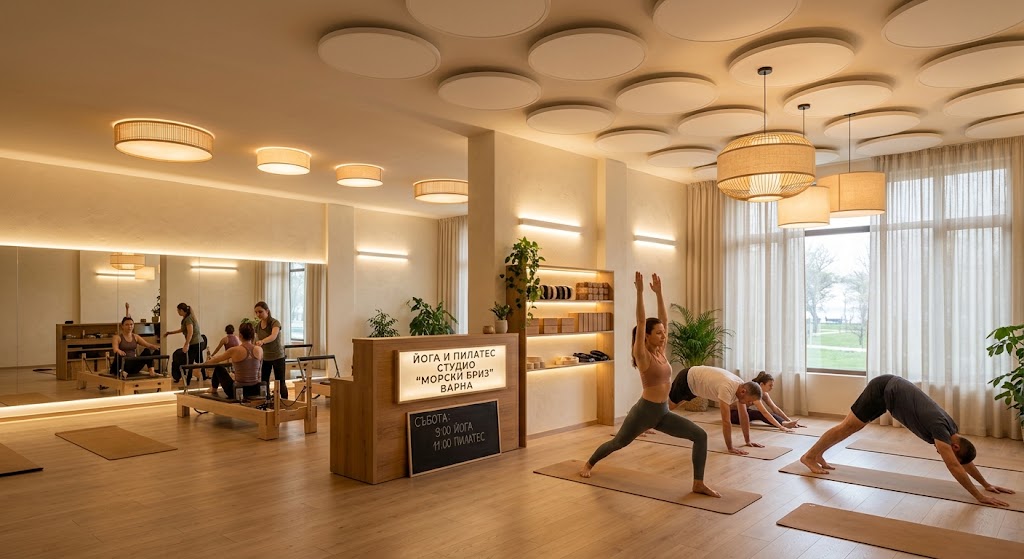
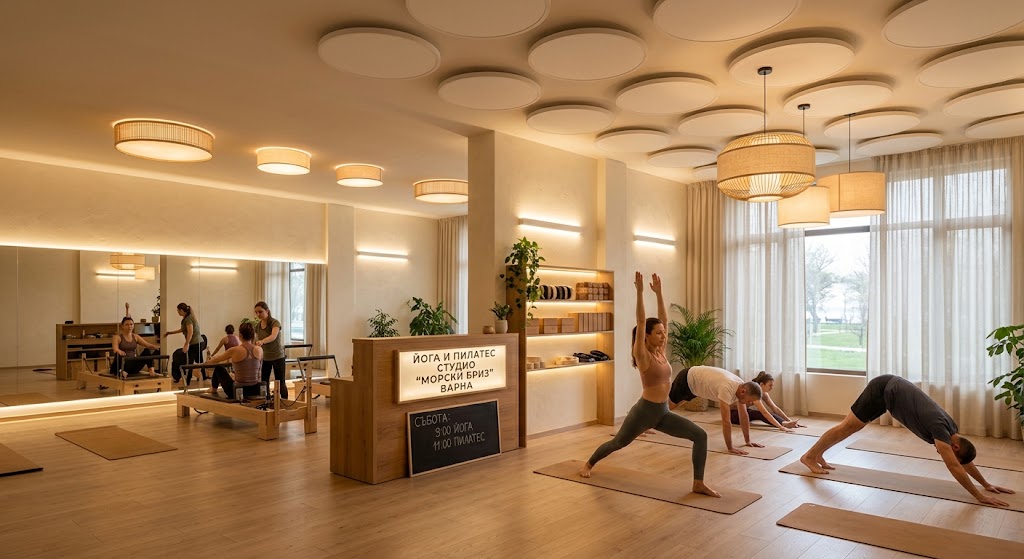
Yoga and Pilates studio lighting should allow the same room to move from an active training session to a calm class without changing the physical installation. This requires soft general illumination, controlled glare, smooth dimming and separate control of functional, accent and decorative lighting.
These studios present a specific visual challenge because of the positions adopted during exercise. On a mat or Pilates reformer, participants frequently look towards the ceiling. Bright downlights and other directly visible sources above the training positions can therefore become uncomfortable even when the overall illuminance appears appropriate.
The lighting layout should begin with the positions of mats, reformers and the main movement areas. Luminaires can be positioned outside frequent upward viewing directions or selected with broad, diffuse or indirect light distribution.
General illumination can be provided through linear systems, diffused luminaires or a combination of direct and reflected light. This avoids turning the ceiling into a grid of bright points directly visible during exercises performed while lying on the back.
Photometric calculations remain useful even where the desired atmosphere is deliberately soft. They allow illuminance and uniformity to be verified instead of creating a calm environment simply by reducing light output without considering its distribution.
A yoga or Pilates studio rarely operates in a single mode. Morning sessions, individual reformer training, group classes, stretching and evening relaxation may all require different light levels.
Dimming allows the intensity to change gradually without simply switching off groups of luminaires and creating uneven dark areas. Depending on the selected fixtures, suitable dimmable drivers and control protocols such as DALI can provide precise adjustment.
Where lighting groups are controlled independently, several predefined scenes can replace repeated manual adjustment before every class.
Scene control should remain simple for instructors. If changing the lighting requires a complicated sequence, the practical result is often that only one setting is used.
Concealed LED lines can illuminate ceiling edges, niches, architectural curves or walls indirectly. This adds visual depth while keeping the light source itself outside the primary field of view.
Linear lighting can also follow the geometry of the studio or the arrangement of reformers. Custom profiles make it possible to coordinate the dimensions and shape of the lighting with the architecture rather than adapting the interior to standard luminaire lengths.
Accent lighting can be used for a textured wall, logo, planting or another distinctive interior element. It should complement the general lighting rather than create excessive contrast beside the training area.
Large mirrors are common in Pilates studios and significantly affect how luminaires are perceived. A fixture that is not directly visible from a training position may still appear in the mirror and become a source of reflected glare.
Luminaire positions should therefore be checked from the principal training locations as well as through the mirror reflections. Soft vertical illumination around the mirror provides more even light across the face and body than a single strong downlight positioned overhead.
Long mirrored walls can benefit from linear or diffuse lighting arranged to limit strong shadows and direct reflections of bright sources.
The reception desk should be immediately recognisable when a visitor enters the studio. A combination of functional light on the counter and a decorative element can visually distinguish the reception area from the training space.
A pendant, custom linear luminaire or decorative lighting composition can reinforce the studio's identity. Where a monitor or tablet is used at the desk, luminaire positions should also be coordinated to prevent distracting screen reflections.
Yoga and Pilates interiors often rely on a restrained design with relatively few visual elements. A custom linear system, circular luminaire or decorative composition can therefore perform both a functional and architectural role.
Dimensions, form, mounting method and control options should follow the space. Custom solutions are particularly useful for unusual ceilings, long reformer layouts, bespoke reception desks or interiors where standard luminaire dimensions would interrupt the design concept.
The starting information should include the architectural plan, ceiling height, locations of mats or reformers, mirrors, reception desk and key decorative features. The general lighting layer, accent lighting, concealed lines, dimming zones and required scenes can then be developed around the actual studio layout.
Polaris Lighting provides lighting design, photometric calculations, dimmable systems and custom linear and decorative lighting solutions for yoga and Pilates studios. Contact us if you need a lighting solution for a yoga or Pilates studio designed around the training areas, mirrors and interior concept.
