Lighting solutions
en

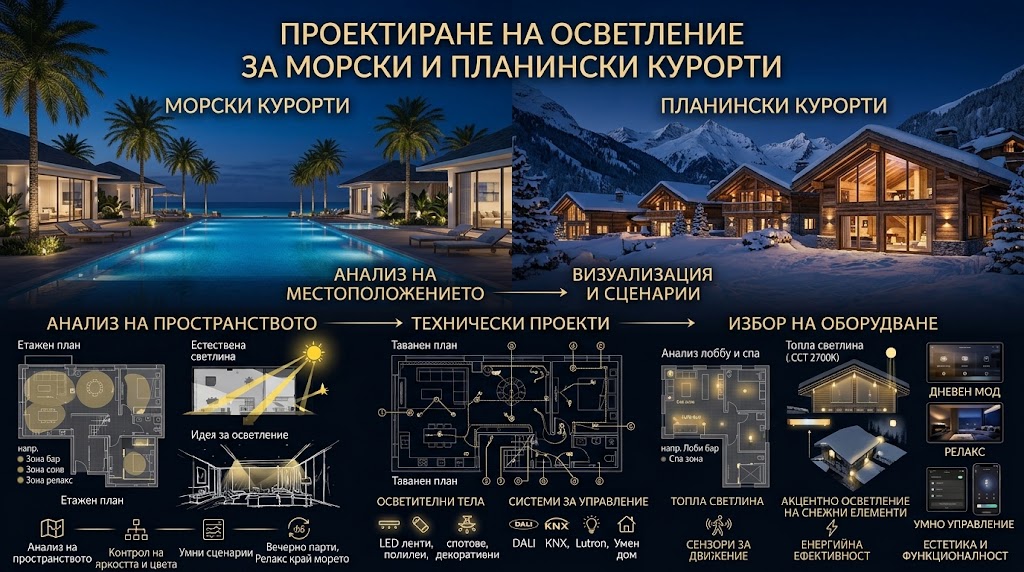
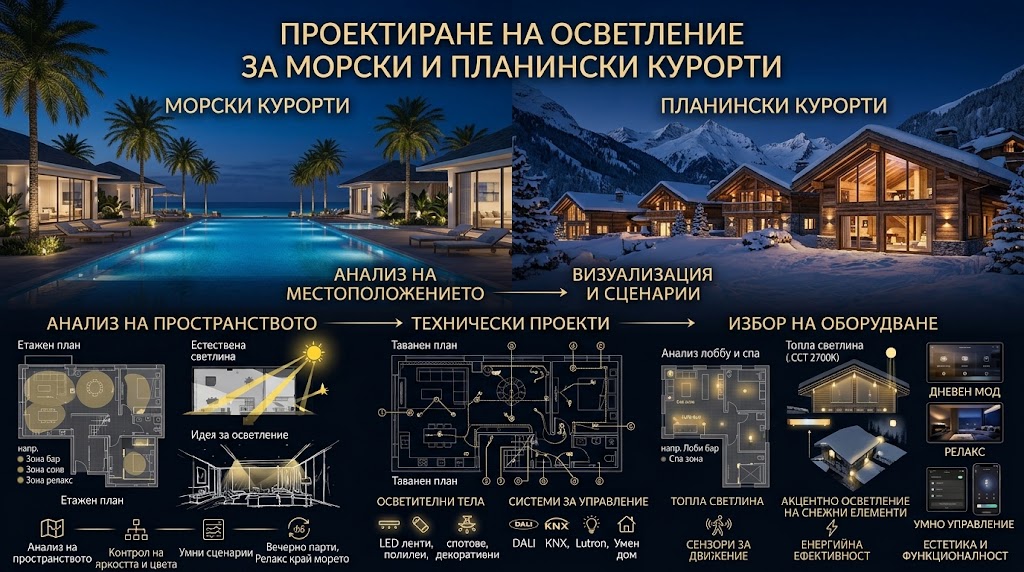
Resort hotel lighting has to operate as one system across very different environments, from calm guest-room lighting to humid spa areas, swimming pools, restaurants, parks and façades. There is another important factor: seasonal operation, where occupancy, active areas and lighting demand can change significantly during the year.
A hotel should not be treated as one uniformly illuminated building. A guest room, restaurant, spa and outdoor pathway have different functions, operating hours and technical conditions. The first step is therefore to divide the project into functional zones and define the required operating modes for each one.
Architectural drawings, interior layouts, ceilings, furniture, electrical routes and controls should be coordinated at this stage. Luminaire positions, drivers, access points and control equipment can then be resolved before construction finishes restrict the available options.
A hotel room requires lighting for arrival, orientation, reading, working, using the mirror and relaxing. A single central luminaire rarely performs all of these functions well.
A more effective scheme combines ambient lighting, bedside reading lights, local lighting for a desk or table and suitable illumination around the mirror. Controls should remain intuitive. Guests should not need instructions simply to switch the room off before going to sleep.
Breakfast requires a different lighting environment from dinner or a late-evening bar. Restaurant areas therefore benefit from dimming and predefined lighting scenes.
Ambient lighting, tables, buffet areas, bars and decorative accents can be controlled separately. Staff can then change the atmosphere without manually adjusting numerous individual luminaires every day.
In spa centres, around swimming pools and in other wet areas, luminaire selection cannot be based on appearance alone. The IP Code classifies the protection provided by an enclosure against the ingress of solid objects and water. The required protection, however, depends on the precise position, exposure to water and installation conditions.
Swimming-pool electrical installations are subject to specific zones and requirements. It is therefore not technically correct to specify one universal IP rating for the entire pool area. The appropriate solution must be determined for each location within the project.
Material durability also matters in spa environments. Humidity, condensation, cleaning chemicals and extended operating hours place additional demands on housings, seals, fixings and service access.
Outdoor lighting should clearly reveal main routes, steps, entrances and changes in level. It does not need to illuminate every part of the landscape to the same level.
Low-level landscape luminaires, carefully aimed fixtures and controlled optics can guide guests through the resort while reducing glare. In coastal or otherwise aggressive environments, material selection should also consider the actual climatic conditions at the site.
Façade lighting can emphasize entrances, vertical elements, terraces and distinctive architectural geometry. This does not mean flooding every surface with the same level of light.
A practical system can use at least two night-time modes. The full scene operates during the busiest guest hours, while decorative lighting can later be dimmed or partially switched off. The architectural identity remains visible while unnecessary energy use is reduced.
Resort properties often experience periods of different occupancy or have entire zones that are temporarily closed. This should be considered when circuits and controls are designed.
DALI, for example, allows luminaires to be individually or group addressed and enables predefined lighting scenes to be recalled. Operating modes can therefore be changed through configuration rather than physical rewiring.
Emergency and escape lighting is designed around safe evacuation routes, exits, stairways and other critical locations. It should not depend on whether a particular hotel wing is currently operating at full occupancy.
In a large resort, access for testing, maintenance and future component replacement should also be considered during the design stage.
For a resort hotel, delivering every luminaire at the same time is rarely the most practical approach. Guest rooms, public spaces, restaurants, spa areas and exterior works often become ready for installation at different stages.
Deliveries can therefore be planned by building, floor or functional zone. This reduces unnecessary storage on site, limits the risk of damage during construction and allows installation teams to receive products in line with the actual work sequence.
Polaris Lighting has completed lighting projects for resort and spa hotels including ENSANA Aquahouse Hotel & SPA, Wave Resort, RIU Astoria and other hospitality properties. The company provides lighting design, technical consultation, interior and exterior lighting solutions, emergency lighting, stock and lead-time checks and delivery directly to the project site. Delivery with Polaris Lighting's own transport is also available for B2B customers.
Polaris Lighting provides lighting design and supply for resort hotels, from guest rooms, restaurants and spa areas to pools, parks, pathways and façades. Contact us if you need a complete resort hotel lighting solution, control strategy and delivery coordination aligned with the stages of your project.
