Lighting solutions
en

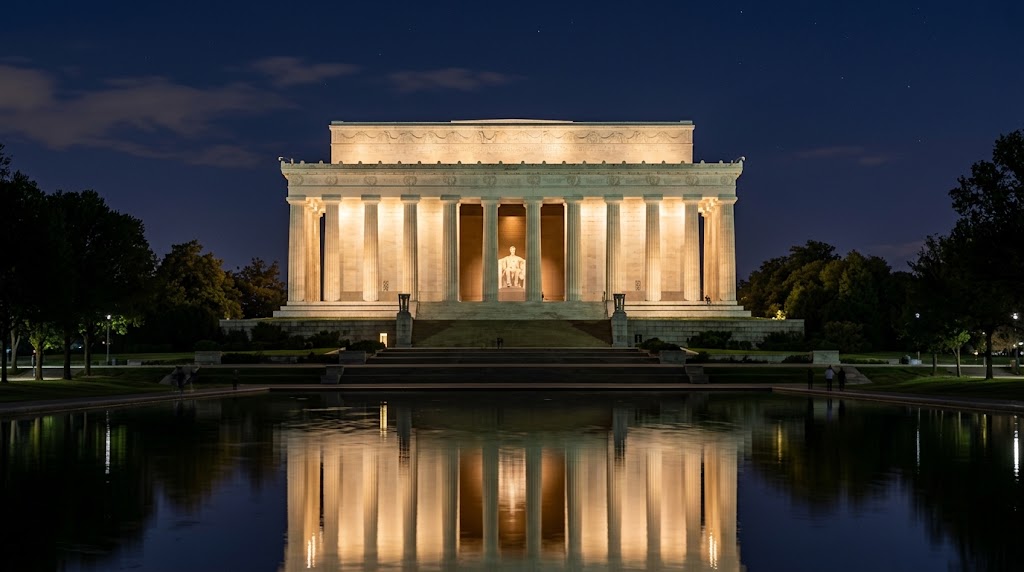
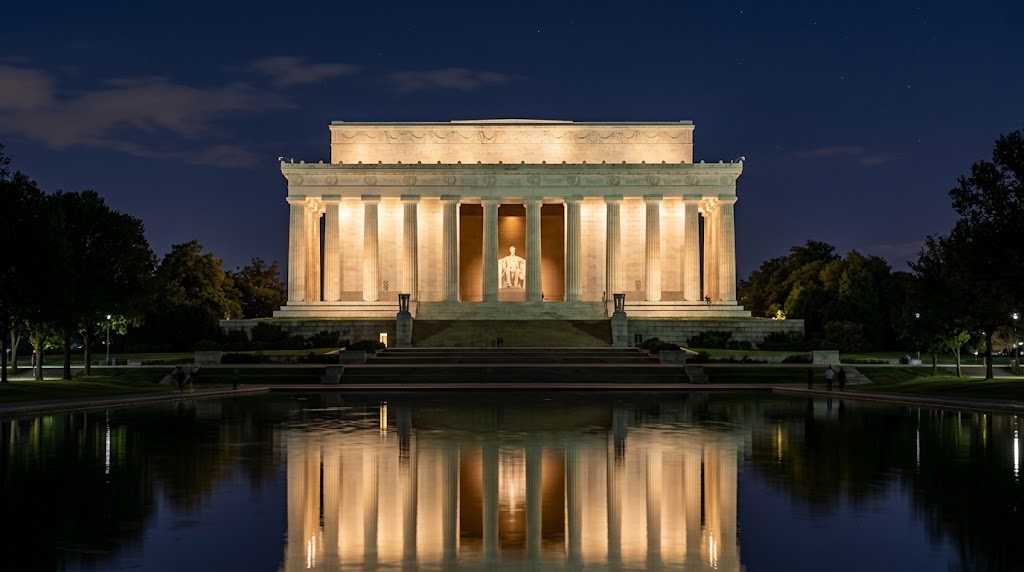
Lighting for monuments and memorial complexes should make architecture and sculpture legible after dark without turning the lighting equipment itself into the main visual feature. Achieving this requires accurate aiming, controlled brightness and real lighting trials on the materials and forms of the specific monument.
The task is more complex than conventional façade lighting. Light has to work simultaneously with architecture, sculpture, inscriptions, surrounding public space and the symbolic meaning of the site.
The first step is to establish a visual hierarchy. Not every part of a monument should receive the same amount of light. A sculpture may be the primary element at one site, while another may be defined by a vertical tower, relief, inscription, colonnade or a complete architectural ensemble.
The design should answer several practical questions:
A successful result rarely comes from uniformly flooding the complete structure with high-output luminaires. Several controlled layers with different beam widths, directions and intensities can create a clearer hierarchy.
3D visualisations and photometric calculations provide an essential technical basis, but they cannot fully reproduce the way real stone, bronze, concrete or aged metal will react to light. Surface texture, weathering, contamination and finishes all affect reflection.
For this reason, night-time trials with actual luminaires are valuable before positions are finalised. The trial can verify mounting position, distance, beam angle, output, colour temperature and how visible the luminaire itself will be.
It can also reveal issues that are difficult to identify on drawings, including unwanted shadows, hot spots, spill beyond the monument or glare experienced by visitors from a particular viewpoint.
In accent lighting, beam distribution determines how accurately the light reaches the intended architectural element. A narrow beam may isolate a column, statue or vertical feature, while a wider distribution can cover a larger surface.
If the beam angle is incorrect, part of the output may pass beyond the monument towards the sky or neighbouring properties. Increasing wattage does not solve this problem. It normally increases the amount of unwanted light.
Luminaires should therefore be selected according to geometry, mounting distance and the exact target rather than simply by comparing lumen output.
A monument is also experienced during the day when the lighting is switched off. Large floodlights, exposed cables, electrical cabinets or inappropriate brackets can damage the daytime composition even when the night-time effect is successful.
Luminaires can sometimes be integrated into paving, landscaping, low architectural features or suitable existing locations. For historic and protected sites, fixing methods must also respect restrictions on interventions in original materials and archaeological areas.
Memorial complexes may host anniversaries, commemorations, official visits and public ceremonies. Pre-programmed lighting scenes are therefore often more practical than operating the installation permanently at a single output level.
Possible scenes include:
Dynamic coloured lighting is not automatically suitable for every memorial. Its use should reflect the significance, purpose and context of the place. In many cases, a restrained static composition is more appropriate than continuous colour changes.
Exterior luminaires operate throughout the year in rain, dust, humidity and changing temperatures. IEC 60529 defines the IP classification system for enclosure protection, but the appropriate level needs to be selected according to the installation environment.
Housing materials, coatings, cable entries, seals, fixings and resistance to mechanical impact should also be assessed. Luminaires installed close to ground level and within public reach may additionally face impact, contamination or vandalism.
The monument should be illuminated, not the sky around it. This requires control of beam direction, restriction of spill beyond the architectural surfaces and avoidance of unnecessarily high output.
Additional care is needed for memorials located in parks, near homes or close to ecologically sensitive areas. Accurate optics, shielding, careful aiming and reduced output later at night can significantly limit unwanted effects.
CIE guidance on obtrusive light emphasises good lighting design and solutions that adapt to changing requirements at different times. A memorial installation can therefore provide the required visual effect during the active evening period and operate at a lower level, or partly switch off, when it is no longer needed.
The strongest results come from combining photometric design, architectural analysis and an on-site lighting trial. This establishes not only how much light is needed, but exactly where it should come from and which areas should deliberately remain in shadow.
Polaris Lighting provides lighting design and architectural lighting solutions for monuments and memorial complexes. Contact us if you need lighting trials, photometric calculations, precise optical selection and a complete lighting solution for a monument or memorial site.
