Lighting solutions
en

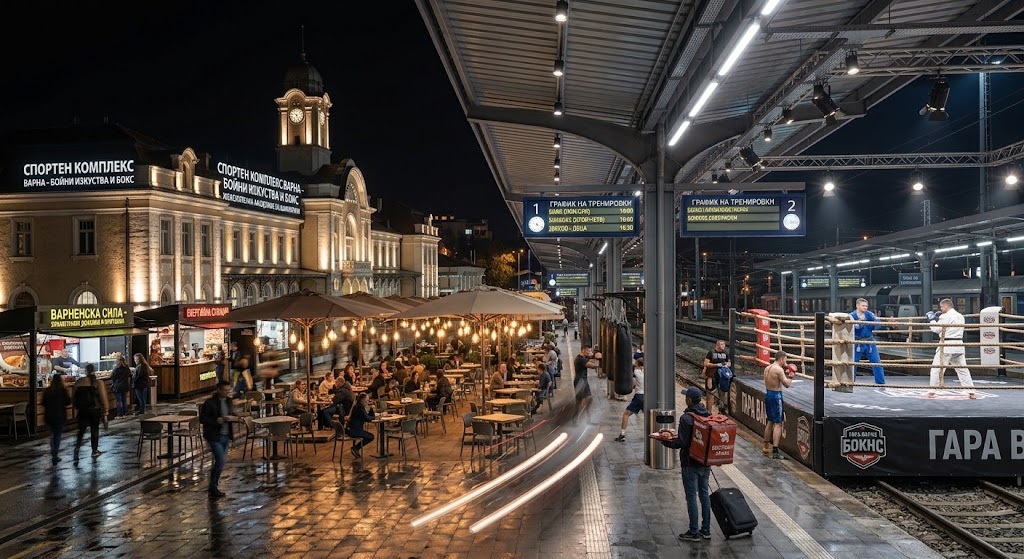
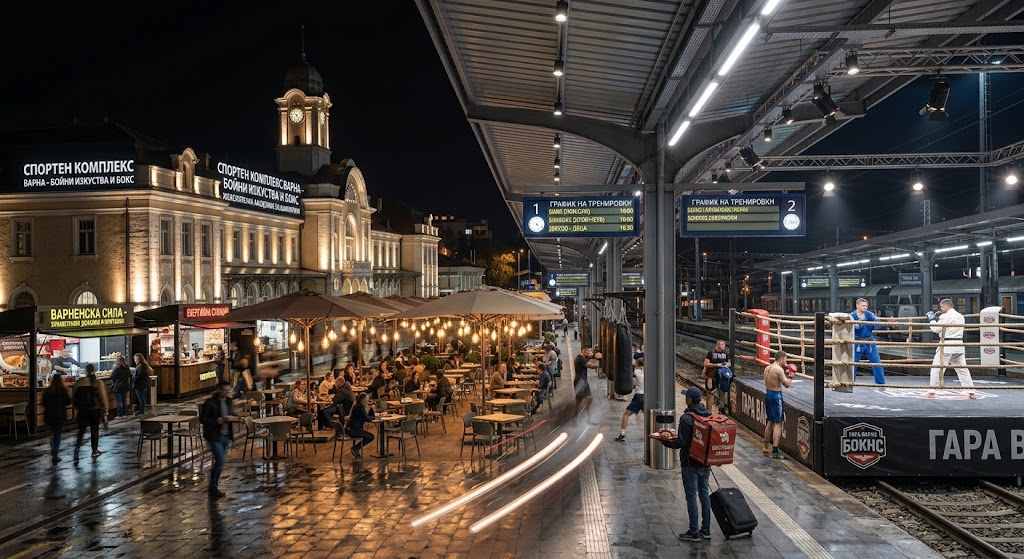
Combat sports hall lighting should provide clear and uniform visibility across the entire active area without exposing athletes to distracting glare as they move or look upwards. Whether the venue contains a boxing ring, tatami or open training area, the design needs to consider not only illuminance in lux but also uniformity, light direction, mounting height, mechanical protection and different training and competition modes.
This is particularly relevant to boxing, kickboxing, Muay Thai, wrestling, judo, karate, taekwondo and similar disciplines, where an athlete's position and viewing direction change continuously. A luminaire that appears comfortable during a static inspection can become a strong source of glare during actual movement.
The primary lighting task is the active sports area. On a boxing ring, illumination should cover the full area between the ropes without creating an excessively bright centre and noticeably darker corners. The same principle applies to the competition and safety areas around a tatami.
EN 12193 for sports lighting considers illuminance, uniformity, glare restriction and the colour properties of the light source as connected design parameters. A sports lighting installation should therefore not be assessed by one average lux figure alone.
Photometric calculations can identify areas where illuminance falls below the intended distribution before installation. Luminaire quantity, output, optics and positioning can then be adjusted to achieve a more balanced result.
Combat athletes need to read rapid movements of hands, legs and the opponent's body. Large differences between bright and dark areas can make the visual environment less consistent as competitors move across the ring or tatami.
Uniform lighting also benefits referees, coaches and spectators. In competition venues, it becomes important for cameras as well, particularly when events are recorded or streamed.
Unlike many conventional working environments, a sports participant does not constantly look horizontally or downwards. Punches, defensive movements, throws and grappling can bring bright ceiling luminaires directly into the athlete's field of view.
A practical design therefore uses luminaires with controlled light distribution and positions them so that the required light reaches the sports area without excessive direct brightness towards participants.
Surface finishes also matter. Highly reflective floors, ceilings or wall panels can produce secondary glare by reflecting bright luminaires. Matt finishes around the active sports area generally provide a more controllable visual environment.
Ceiling height influences both the type of luminaire and the optics required. At greater mounting heights, sufficient light needs to reach the sports surface without concentrating illumination into isolated bright areas. With lower ceilings, the challenge is often different: luminaires are closer to the athletes' field of view and more exposed to accidental mechanical impact.
A high-bay luminaire or floodlight should therefore not be specified automatically for every combat sports hall. Mounting height, distance from the ring or tatami, active-area dimensions and expected viewing directions all need to be considered.
Training facilities can expose lighting equipment to accidental mechanical impact. Where luminaires are mounted lower or close to training equipment, an appropriate level of mechanical protection should be assessed.
The IK code describes the degree of protection provided by an enclosure against external mechanical impacts. Higher IK classifications correspond to greater standardised impact energy resistance.
However, an IK rating should not be confused with certified ball-impact resistance. Where a combat sports facility is also used as a multi-purpose sports hall, luminaires may require a separate ball-impact safety assessment according to the relevant sports-hall standard.
A sports hall does not necessarily need to operate at one lighting level at all times. Daily training can use an efficient functional scene, while competitions can activate additional lighting groups for the ring or tatami, officials and spectator areas.
Where competitions are professionally recorded or broadcast, camera positions also become part of the lighting brief. EN 12193 includes specific considerations for television and film recording and addresses lighting behaviour for slow-motion cameras.
Emergency lighting is an independent safety system and should not depend on training or competition lighting scenes. If the normal lighting supply fails, occupants need to be able to identify exits and use designated escape routes safely.
EN 1838:2024 specifies a minimum horizontal illuminance of 1 lx at floor level within defined escape-route areas. Large open spaces may also require open-area or anti-panic emergency lighting depending on their layout and risk assessment.
The design requires the dimensions and height of the hall, the exact size and location of the ring or tatami, training areas, spectator seating, officials' positions and escape routes. Lighting modes, luminaire positions and photometric requirements can then be developed around the actual use of the venue.
Polaris Lighting provides lighting design, photometric calculations, luminaire selection and lighting solutions for combat sports halls and other sports facilities. Contact us if you need professional lighting design for a boxing ring, tatami or combat sports training facility.