Lighting solutions
en

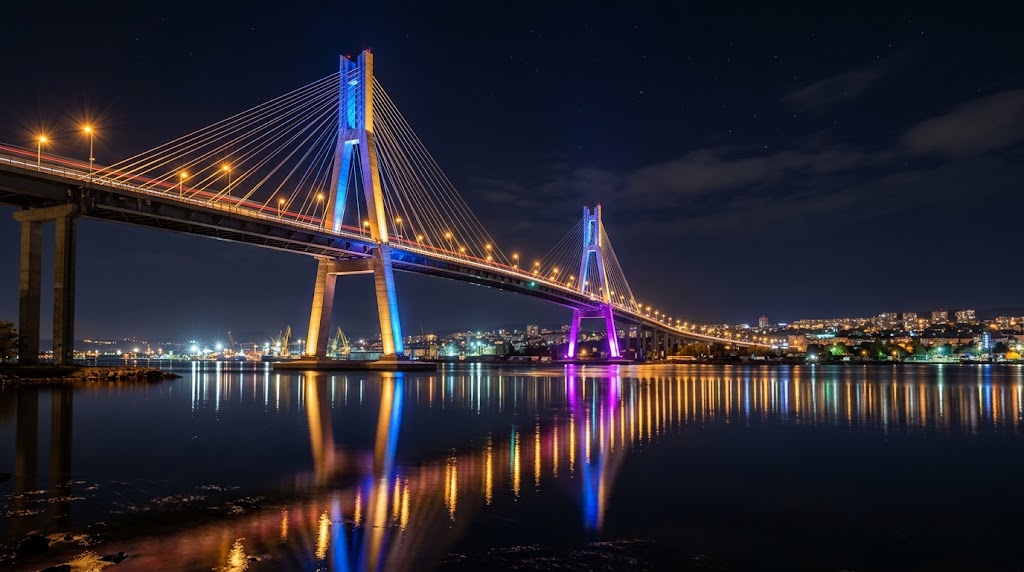
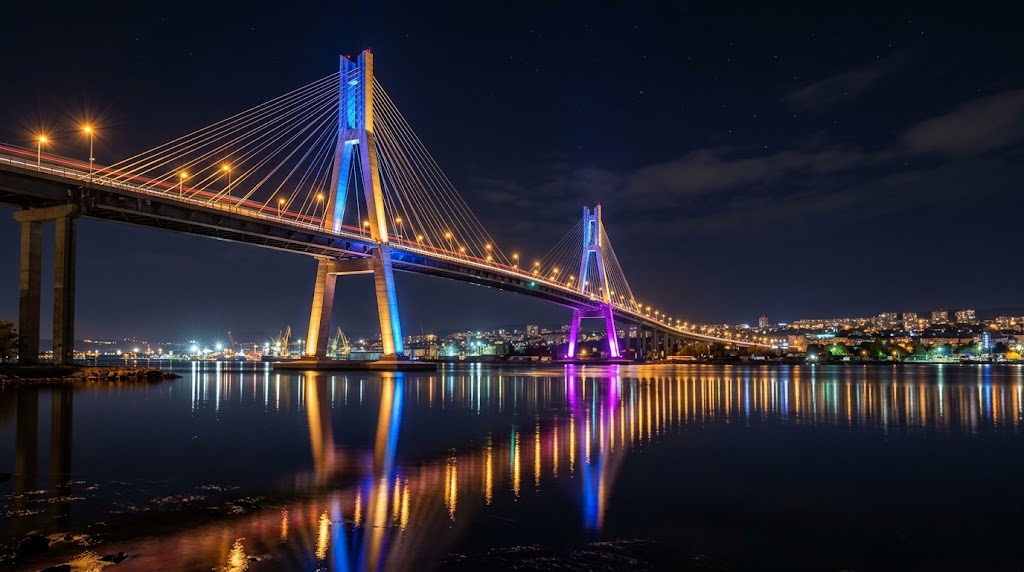
Architectural bridge lighting is not simply a matter of aiming floodlights at a structure. A successful design determines which elements should remain visible after dark, where the bridge will be viewed from and how the lighting can be integrated without interfering with traffic, the surrounding environment or future maintenance.
A bridge is unusual because it rarely has a single primary façade. It may be seen from the roadway, pedestrian routes, riverbanks, nearby streets, buildings, parks or the water below. Lighting design therefore needs to treat the bridge both as an architectural composition and as a piece of exterior infrastructure.
The first step is not choosing luminaires. It is defining a visual hierarchy. If every surface receives the same amount of light, the structure loses depth and the bridge can appear as a uniformly illuminated object.
Depending on the bridge type, the lighting concept may emphasise:
Lighting should help people understand the structural logic after dark. Vertical illumination can emphasise pylons, linear lighting can define the edge of the deck and accurately aimed floodlights can reveal the rhythm of arches or supporting elements.
A bridge is rarely viewed only from the side. The lighting design should identify the main viewpoints and distances, including bridge approaches, both riverbanks, waterfront promenades, neighbouring bridges, elevated buildings and important public spaces.
The design must also be assessed from the position of drivers and pedestrians. A luminaire that produces an attractive effect from a distance may sit directly within the field of vision of someone crossing the bridge. Architectural lighting should therefore be coordinated with functional road and pedestrian lighting rather than treated as an isolated decorative system.
Bridges with a pronounced vertical crest require particular attention, as bright sources beyond the highest point may enter a driver's field of view suddenly.
RGB and RGBW systems allow colours and scenes to be changed for events, public holidays or specific occasions. That capability does not mean that a bridge should constantly change colour.
A more controlled approach is to establish a calm everyday scene and a limited set of programmed modes. Dynamic effects need to be assessed in relation to nearby homes, the surrounding environment and road users. Rapid flashing, abrupt transitions and excessive luminance can turn an architectural feature into a visual disturbance.
Control systems can also use schedules, different output levels through the night and a reduced late-night scene when activity in the surrounding area decreases.
Bridge luminaires are continuously exposed to rain, dust, changing temperatures, wind and condensation. Depending on the location, they may also face coastal salt, road de-icing salts, high humidity or spray from the water below.
The IP rating is therefore only one selection criterion. Housing materials, protective finishes, fixings, cable entries, seals, mechanical resistance and the operating environment of drivers and control equipment must also be considered.
Power and control cabling cannot simply be added wherever convenient after the bridge structure has been completed. The design should define cable routes, distribution boards, connection points and access to drivers and controllers at an early stage.
Routes should be protected, visually discreet from important viewpoints and coordinated with the structural design. Structural movement, expansion joints and areas subject to vibration or mechanical stress also need to be taken into account.
More light does not necessarily create a better bridge. Poorly controlled output can be directed towards the sky, water, neighbouring buildings or natural habitats without improving the architectural appearance.
Control begins with luminaire optics. Suitable beam distributions, accurate aiming, shielding and appropriate output levels help put light on the intended structural surfaces rather than into the surrounding environment.
Bridges crossing rivers or located near parks, protected habitats or ecologically sensitive areas require particular care. The lighting concept should evaluate whether every illuminated element is genuinely necessary and whether output can be reduced during low-activity periods.
A luminaire may occupy the ideal position in a night-time rendering but become expensive to operate if every service intervention requires a lane closure, specialist access platform or rope-access team.
The design stage should therefore define:
The process starts with the architectural and structural design, the characteristics of the surrounding area and the main viewing positions. The visual hierarchy, lighting scenes and potential luminaire locations are then established.
Photometric calculations and luminaire data are used to assess light distribution, required output and unwanted spill light. At the same time, mounting details, electrical routes, controls and maintenance access need to be coordinated with the engineering design.
The final result should therefore be more than a visualisation of how the bridge will look at night. It should be a workable system in which architectural identity, safety, environmental impact, electrical infrastructure and long-term maintenance are considered together.
Polaris Lighting provides lighting design and architectural bridge lighting solutions. Contact us if you need architectural lighting for a bridge, including photometric calculations, luminaire selection and positioning, and development of a complete lighting concept.