Lighting solutions
en

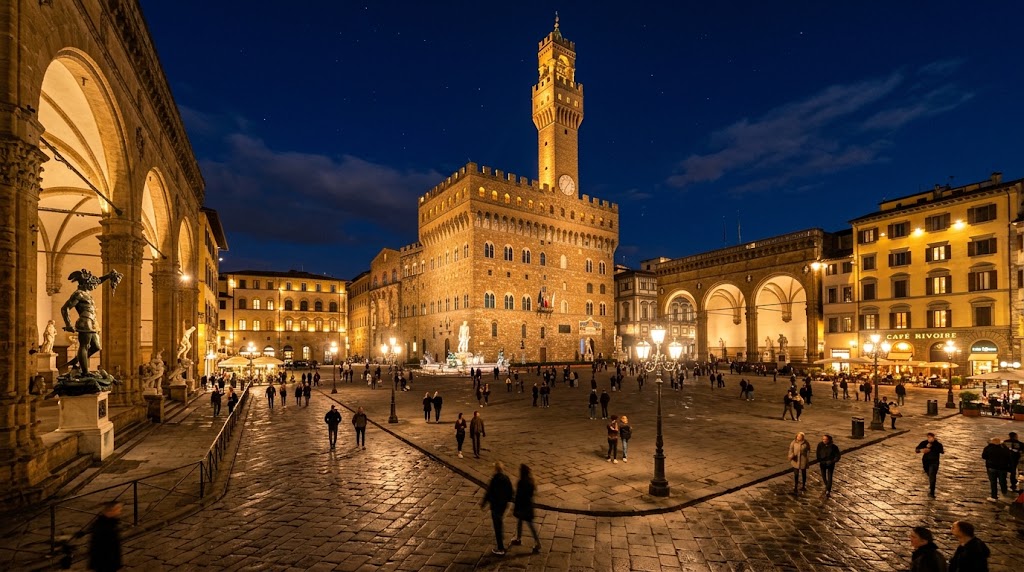
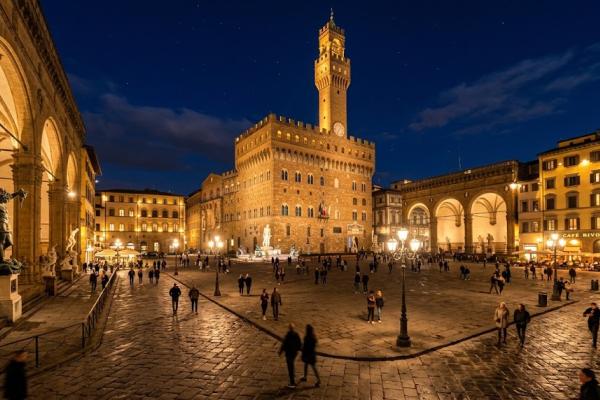
Good urban square lighting must support safe movement, clear orientation and a recognizable night-time identity at the same time. It should not be designed as one uniformly bright surface, but as a system of lighting layers for pedestrian routes, façades, monuments, events and decorative accents, controlled according to time and use.
The first task is to help people see paving changes, steps, kerbs, ramps, crossings and other users early enough to move safely. Where a square connects to streets, cycle routes or parking areas, different zones may fall into different lighting classes and should be assessed separately.
For pedestrian and adjacent traffic areas, the designer should work with the applicable requirements of EN 13201 and with photometric calculations. Average illuminance is only one parameter. Minimum illuminance, uniformity, vertical light for facial recognition and glare control are also important. The goal is adequate visibility without unnecessary over-lighting.
Architectural lighting should respond to the form, material and significance of a building. Instead of washing the entire volume with the same brightness, a more precise result often comes from selectively lighting columns, cornices, arches, reliefs and entrances. Narrow or asymmetric optics, shields and accurate aiming help keep light within the intended area.
For monuments and public art, the main viewing positions, surface reflectance and material colour should be checked. Lighting should reinforce the visual hierarchy of the square rather than make one object aggressively compete with the whole night-time environment.
A city square often has more than one operating mode. Everyday evening lighting may be calm and restrained, while a concert, market, civic celebration or formal ceremony may require stronger visual emphasis and a different lighting composition.
It is therefore useful to plan power supplies, control points and positions for temporary equipment from the start, without routing cables across primary pedestrian paths. Decorative lighting for trees, benches, water features or paving should support orientation and the character of the place rather than create visual noise.
Glare is one of the most common problems in outdoor public spaces. It occurs when a bright source is directly visible in the field of view or when a poorly aimed projector creates excessive contrast with a darker background.
The solution starts with luminaire optics and position. Shielded light sources, appropriate aiming angles, lower apparent brightness, cut-off accessories and mounting outside primary sightlines can all help. For façade and accent lighting, on-site mock-ups are especially valuable because real materials, reflections and viewing angles are difficult to judge from visualisations alone.
A control system allows the same square to operate differently during the evening peak, late-night hours, events or periods of low activity. Useful scenes can include “everyday”, “event”, “late night” and “maintenance”.
DALI-2/D4i or another suitable control architecture can provide grouping, dimming, pre-programmed scenes, schedules and system-status feedback. This makes it possible to reduce light output when full power is unnecessary while keeping critical safety areas appropriately lit.
Lighting should be evaluated over its operating life, not only on commissioning day. Dirt on optical surfaces, lumen depreciation, moisture, corrosion or changes in aiming can gradually reduce performance.
The design should therefore include a maintenance factor, a realistic cleaning and inspection schedule, access to drivers and luminaires, clear circuit identification and provision for replacement components. For in-ground luminaires, drainage, mechanical protection and service access without damaging the paving are also important considerations.
The process starts with mapping pedestrian movement, functional zones, architectural landmarks, event areas and constraints created by surrounding buildings. It then moves to photometric modelling with LDT/IES data, selection of optics and positions, lighting trials, scene programming and post-installation measurements.
Common mistakes include selecting fittings mainly by wattage, over-lighting façades, placing visible projectors near eye level, failing to create a separate event mode and using luminaires that are difficult to access for service.
Polaris Lighting provides lighting design, photometric calculations, luminaire selection and positioning, architectural and exterior lighting, and lighting-control solutions for urban squares. Contact us if you need lighting design or implementation for an urban square.
