Lighting solutions
en

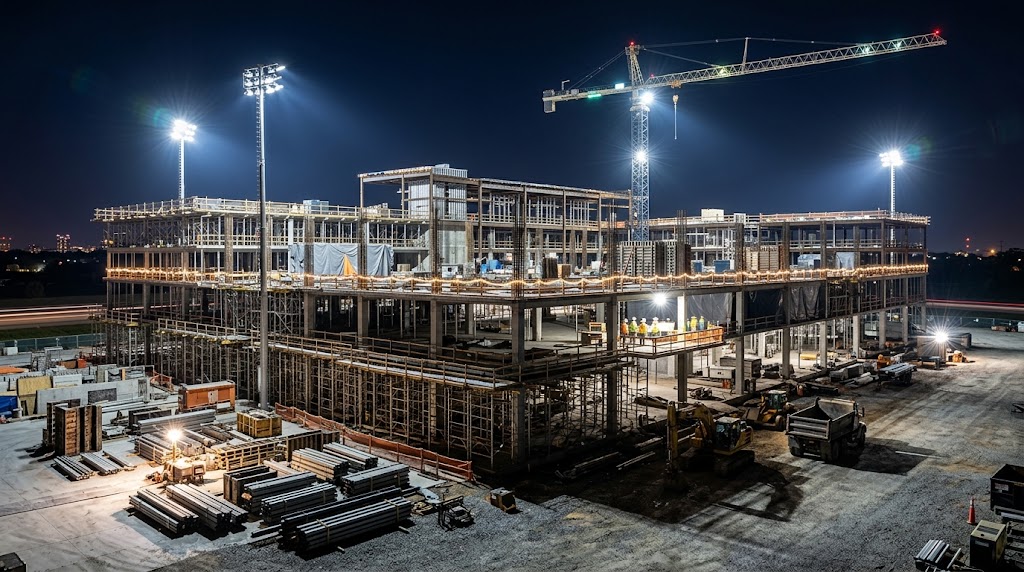
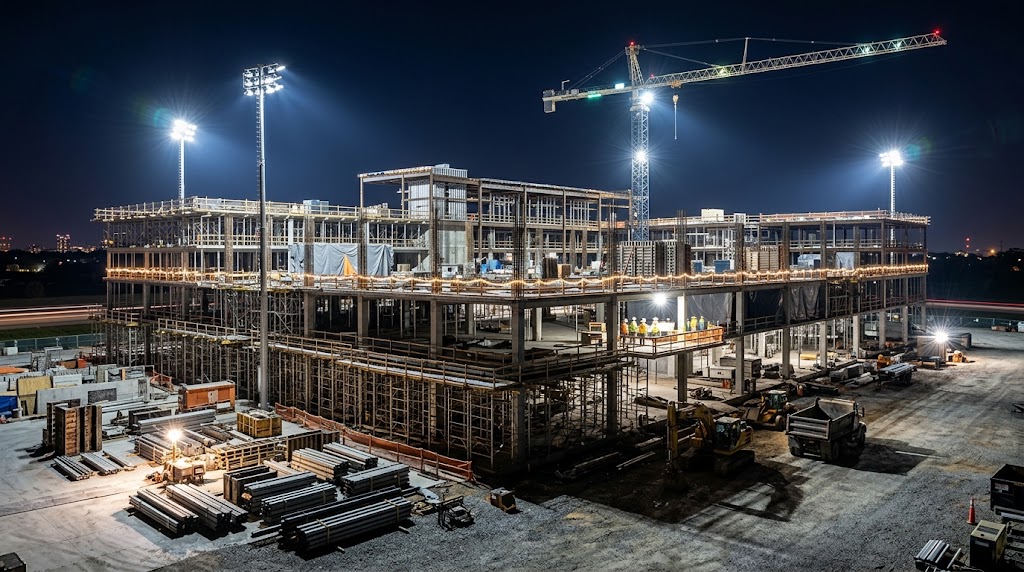
For a construction company, effective lighting supply involves far more than obtaining prices for a list of luminaires. Drawings and the bill of quantities need to be converted into a controlled product specification with clearly defined models, technical parameters, quantities, lead times and possible equivalents.
Procurement should then follow the actual construction programme. If a luminaire requires custom production or the required quantity is not in stock, this needs to be identified before its installation becomes a critical activity on site.
The process can begin with architectural or electrical drawings, a bill of quantities, a luminaire list or approximate quantities. The first task is to compare the information contained in the different project documents.
Luminaire references on the drawings, quantities, mounting methods and specified technical characteristics should be checked against each other. If drawings, schedules and the BOQ do not match, the position should be clarified before an order is placed.
Each item should have a clear technical identity. Depending on the project, this may include model, dimensions, wattage, luminous flux, colour temperature, colour rendering, optics, IP protection, mounting method, driver and control protocol.
A technical equivalent is not simply a fixture with a similar appearance or approximately the same wattage. A proposed replacement must preserve the parameters that are important to the design.
The comparison normally includes:
This becomes particularly important when the originally specified product is unavailable or its lead time no longer fits the construction programme. A suitable alternative should solve the procurement problem without creating a technical one.
For larger construction projects, a standard online unit price is rarely sufficient for budgeting. Project quotations are prepared according to the selected products, quantities and commercial conditions of the specific order.
The quotation should also be easy to compare with the BOQ. Where an alternative product is proposed, it should be clearly identified against the original item rather than appearing as an unexplained change within the total price.
Project conditions may be available for larger quantities, but price should always be considered together with stock and lead time. A less expensive fitting that arrives after its required installation date may not be the more economical option for the project as a whole.
A single BOQ may contain standard stocked luminaires, products from several manufacturers and items that need to be manufactured specifically for the project. Their availability should not be treated as identical.
A stock and lead-time check identifies which quantities are immediately available, which need to be reserved and which require production. Long-lead or critical items can then be released earlier.
For key areas, large quantities or highly visible architectural luminaires, approving a sample or physical fitting before the final order can prevent expensive changes later.
A physical review can confirm dimensions, housing finish, diffuser appearance, quality of light and how the luminaire integrates with the ceiling, profile or surrounding materials.
Samples are also useful when evaluating a proposed technical equivalent. Two products can appear similar in a specification table while producing a noticeably different visual result when installed.
Standard product dimensions do not always match the architectural module. This is particularly relevant to linear systems, aluminium profiles and lighting details that must follow exact ceiling, wall, niche or furniture dimensions.
Final dimensions need to be confirmed at the correct stage. Measurements taken too early can become obsolete following changes on site, while dimensions submitted too late can move production beyond the planned installation window.
Delivering the entire lighting package at once is not always efficient. If part of the building is still under construction, early delivery requires additional storage and increases the risk of damage or loss.
Phased deliveries can follow floors, zones or installation stages. Systems that need to be incorporated into ceilings can arrive first, while decorative fittings for completed spaces can be released later.
The critical date is not only when a luminaire needs to arrive. It is also the latest date on which it can be ordered. Every item with a specific production or delivery lead time needs sufficient time between final approval and its scheduled installation.
The construction programme should therefore be linked to procurement milestones. Sample approvals, final dimensions, production, stock reservations, deliveries and installation windows all need to be monitored. If the site programme changes, these dependencies should be reviewed as well.
The most efficient workflow resolves technical questions before products reach the construction site. A clear specification, verified equivalents, confirmed stock and coordinated deliveries reduce the need for urgent substitutions during installation.
Polaris Lighting provides lighting solutions and project supply for construction companies, including review of project requirements and bills of quantities, technical product selection, project quotations, stock checks, custom configurations and delivery organisation. Contact us if you need lighting for a construction project and coordinated project supply.
